Before a single application form appears, BigPay Later asks for something Nimbura’s process never does: an active BigPay Malaysia wallet account. A reader who already carries a BigPay card has that requirement out of the way without thinking about it. A reader who has never opened the BigPay app is…
Table of contents
Before a single application form appears, BigPay Later asks for something Nimbura’s process never does: an active BigPay Malaysia wallet account. A reader who already carries a BigPay card has that requirement out of the way without thinking about it. A reader who has never opened the BigPay app is looking at a signup step before the loan process itself even starts. Both companies operate as licensed moneylenders under KPKT, and that shared licensing still matters, but it says nothing about how different the actual path to funds looks between the two. This guide sets out what changes when a loan lives inside a wallet app instead of standing on its own, based on what Nimbura and BigPay Later publish directly, checked in September 2026.
One caveat worth flagging early: BigPay Later does not publish a fixed loan amount range, interest rate or tenure anywhere on its public website. Its loan calculator, along with the terms shown once an application is underway, are generated per applicant, so figures that circulated when the product first launched should not be treated as current. Wherever a number has not been published, this guide states that plainly instead of estimating one.
Where the Application Actually Begins
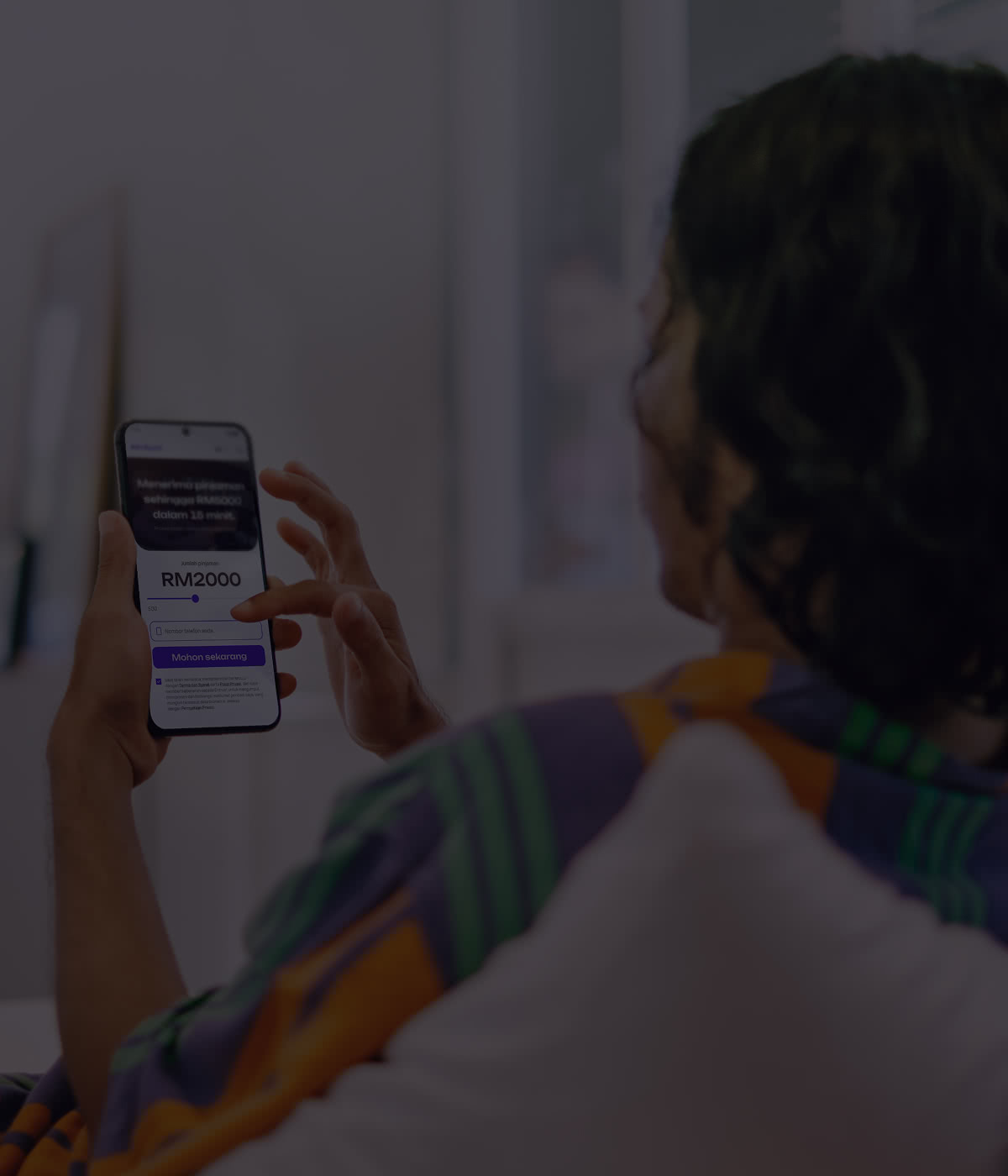
Its FAQ states plainly that an applicant needs to register for a BigPay Malaysia account before a loan application can even start, and approved funds are disbursed into that BigPay account rather than a bank account directly, from where they can be spent using a BigPay card or withdrawn at an ATM. For a borrower who already uses BigPay day to day, this removes a separate signup step. For someone who has never used BigPay, opening and verifying a wallet account becomes part of getting a loan, not just a side effect of applying. Readers weighing a pay-later style product like this against a conventional instalment loan. See Nimbura’s personal financing service page for Nimbura’s personal financing service useful background, since BigPay Later sits closer to that comparison than a typical bank loan does.
Nimbura’s application, by contrast, does not require a wallet, card or any other product from the company. A borrower submits an application, Nimbura reviews it, and approved funds move to the borrower’s own bank account, with the whole sequence described on its site as three steps: submit, get approved, get paid.
What Each Lender Publishes About Rates and Loan Size Before You Apply
Nimbura states its terms upfront on its own site: loans start at RM300, first-time borrowers can be approved for up to RM5,000, repeat borrowers with a clean payment history can reach RM10,000, and the maximum APR across the board is 18% per annum, over a term of 91 to 180 days. A borrower can compare that ceiling against their own needs before starting an application.
BigPay Later does not publish an equivalent range. Its FAQ directs applicants to use its loan calculator to find out how much they can borrow and for how long, and its help centre describes the interest as a fixed charge that will be disclosed inside the app before an applicant accepts a loan offer. In practice, the specific amount, rate and tenure on offer are shown only after an applicant has gone far enough into the process to generate a personalised quote, rather than being visible as a general range beforehand.
For a borrower who wants a number to compare lenders side by side before committing time to any single application, Nimbura’s published figures give a starting point. For a borrower who does not mind checking a personal offer first and comparing afterward, BigPay Later’s calculator still provides that figure, just later in the process.
Fees, Late Payment and Settling Early
Nimbura’s public materials do not itemise a stamp duty figure or a specific late payment rate, and its FAQ instead describes a repayment extension option of up to three 30-day extensions if a borrower needs more time, alongside early repayment with no penalty.
BigPay Later’s FAQ confirms a stamping fee applies but does not state the amount, describing it only as a small stamping fee that is a tax on legal documents collected by the Malaysian government. Late interest is charged daily on the outstanding principal, calculated as the late interest rate divided by 365 and multiplied by the outstanding principal, though the specific rate used in that formula is set per loan agreement rather than published as one universal figure; the FAQ’s own worked examples use an illustrative rate purely to demonstrate the calculation, not as BigPay Later’s actual charge. Partial repayments are applied first against late interest and fees, then loan interest, then the principal itself.
Early repayment is available on both. Nimbura states this carries no penalty. BigPay Later’s FAQ confirms early settlement is possible, but its wording on whether paying early reduces the total interest owed is not fully explicit, so a borrower planning to settle a BigPay Later loan ahead of schedule should confirm the exact effect on total cost directly in the app before relying on it.
Eligibility: Age, Residency and Credit History
Nimbura’s stated eligibility is broad: Malaysian citizens aged 18 to 70, a valid MyKad, and an active bank account, with no income threshold or employment-type restriction listed on its site.
BigPay Later’s eligibility is narrower on age and adds conditions Nimbura does not state. It accepts Malaysian citizens aged 18 to 65, or foreigners holding a long-term residence pass aged 25 to 55, provided they currently reside in Malaysia. Its FAQ also requires income sustainable enough to service all outstanding loans and a good credit history, neither phrased as a fixed number, so how strictly either is assessed is not something a borrower can check before applying. Someone without a payslip is not automatically excluded by either lender’s published criteria. Nimbura’s dedicated loans-without-a-payslip page covers how a payslip-free loan application works covers how that situation is generally handled by licensed moneylenders.
On documents, BigPay Later’s FAQ states applicants generally will not need to provide payslips, bank statements or EPF records, with exceptions handled individually. Nimbura lists MyKad as the primary requirement, with supporting documents requested as needed rather than specified upfront.
Applying and Getting Paid
Nimbura’s process runs in three steps: submit the application, receive approval, receive the funds, backed by e-KYC, OTP and MCMC-issued digital certificates, with approval typically taking around 15 minutes and funds arriving the same working day to the borrower’s bank account.
BigPay Later’s application happens inside the app: a borrower selects a loan amount and term through the calculator, completes the application, and signs a Moneylending Agreement by OTP once approved. Its FAQ describes aiming for approval in minutes, while a separate BigPay Later help centre article states results can take up to three working days, so the actual wait may depend on how much additional verification a specific application needs. Once signed, funds are said to reach the borrower’s BigPay account within minutes, from where they can be spent by card or withdrawn at an ATM rather than moved to an external bank account automatically.
| Criteria | Nimbura | BigPay Later |
|---|---|---|
| Legal entity & KPKT licence | NIMBURA SDN. BHD. (202001030236 / 1386556-P), licence WL7662/10/01-3/110127, valid 12/01/2025-11/01/2027 | BigPay Later Sdn. Bhd., licence WL7124/14/01-3/210927, valid 22/09/2025-21/09/2027 |
| How to apply | Standalone application, no other product needed | Requires registering a BigPay Malaysia account first |
| Loan amount | From RM300; up to RM5,000 first loan, up to RM10,000 for repeat borrowers | Not published as a fixed range; shown in the app’s loan calculator per applicant |
| Loan term | 91 to 180 days | Not published as a fixed range; shown per applicant in the app |
| Maximum interest rate | 18% per annum | Flat rate, disclosed to each applicant in the app before acceptance; no public range published |
| Stamp duty | Not publicly specified | Described as a small stamping fee; exact amount not publicly specified |
| Late payment charge | Not publicly specified | Charged daily on the outstanding principal; exact rate set per loan agreement, not published as a fixed figure |
| Repayment extension | Up to 3 extensions of 30 days each | Not publicly specified |
| Documents required | MyKad as the primary requirement; supporting documents as needed | Generally none required at application; exceptions handled case by case |
| Approval time | Around 15 minutes | Described as minutes for straightforward cases, up to one working day if further checks are needed |
| Disbursement | Same working day, to the borrower’s bank account | Within minutes of signing the agreement, to the borrower’s BigPay account |
Rows marked “not publicly specified” reflect what each lender’s own website states at the time of research, not an assumption that no such fee or policy exists. Borrowers who want an exact figure before applying should ask the lender directly, since a personalised quote inside an app is not the same as a published rate a borrower can compare in advance.
Yes. BigPay Later’s own FAQ states that applicants need to register for a BigPay Malaysia account, and the application itself runs inside the BigPay Later app rather than as a separate standalone form.
BigPay Later describes its interest as a flat rate that is disclosed to each applicant inside the app before they accept a loan offer. It is not published as a fixed percentage or range on the company’s website, so the exact rate depends on the individual application.
Its FAQ states that applicants generally will not need to provide such documents, with exceptions handled on a case-by-case basis. Nimbura, by comparison, lists MyKad as the primary requirement and asks for supporting documents only as needed.
BigPay Later’s eligibility criteria allow foreigners holding a long-term residence pass, aged 25 to 55, who currently reside in Malaysia. Nimbura’s published criteria are limited to Malaysian citizens.
Its FAQ describes a daily calculation: the late interest rate divided by 365, multiplied by the outstanding principal. The specific rate used is set per loan agreement rather than published as one universal figure.
This is not described in BigPay Later’s published FAQ or help centre at the time of writing. Nimbura’s FAQ, by comparison, states up to three extensions of 30 days each.
Approved funds are deposited into the borrower’s BigPay account rather than an external bank account, and can then be spent using a BigPay card or withdrawn at an ATM.
Matching the Setup to Your Situation
Someone who already keeps money in a BigPay account, wants to see a personalised offer before comparing further, and does not mind an application that lives inside an existing app may find BigPay Later’s process fits naturally into how they already manage money, and its lighter document requirements can matter for a borrower without ready payslips. Someone who prefers to compare a published rate and loan ceiling before starting any application, who wants funds to land directly in a bank account rather than a wallet, or whose situation falls outside BigPay Later’s narrower age and residency criteria may find Nimbura’s standalone process and openly stated 18% APR ceiling easier to evaluate in advance. Checking both lenders’ current terms directly, including the exact rate and fees shown after applying, is worth doing either way, since these are the figures that will actually apply to a specific loan.
Disclaimer
The loan terms, interest rates, fees and eligibility details in this article reflect what Nimbura and BigPay Later had published at the time this research was carried out, and either lender can change those terms without notice. Several figures specific to BigPay Later, including its exact interest rate, loan amount and stamp duty, are shown only to individual applicants inside its app rather than published as general figures, so this article reports what is disclosed instead of estimating a number that is not public. Approval for either lender depends on that lender’s own assessment of the applicant, and meeting the criteria listed here does not guarantee a loan will be approved. Anyone considering either option is encouraged to confirm current terms directly with the lender before applying, and to weigh their own ability to repay before taking on any loan.